North Korea's Nuclear Ultimatum: Kim Jong Un Defines Terms for US Engagement
In a series of landmark statements delivered at the close of the ruling Workers' Party congress, North Korean leader Kim Jong Un has laid bare his country's strategic vision for the next five years, most notably articulating stringent conditions for future engagement with the United States. His declaration unequivocally states that the future of north korea us attitude, and indeed their relationship, hinges entirely on Washington's approach, particularly its willingness to acknowledge Pyongyang's status as a nuclear power. This bold stance, coupled with an aggressive dismissal of South Korea, marks a critical juncture in the volatile geopolitics of the Korean Peninsula.
Kim Jong Un's Conditional Overture to the US: A Nuclear Acceptance Precedent
Kim Jong Un's message to Washington was clear yet conditional: while he expressed an openness for the two nations to "get along," this possibility is contingent on the US withdrawing its "policy of confrontation" and, crucially, respecting North Korea's "current status." This "current status" is undeniably linked to Pyongyang's established and continuously expanding nuclear capabilities. By demanding respect for its nuclear position "as stipulated in the Constitution," Kim signals a fundamental shift in the terms of engagement, moving away from denuclearization as a prerequisite for dialogue and towards a framework where its nuclear arsenal is an accepted, immutable fact.
This is a significant departure from the previous diplomatic endeavors, particularly the three high-profile summits Kim held with then-US President Donald Trump. While those meetings sparked fleeting hopes of a breakthrough, they ultimately failed to produce a comprehensive denuclearization agreement, with North Korea consistently refusing to dismantle its nuclear program without significant concessions, including the easing of international sanctions. The current rejection of overtures for a fourth meeting underscores Pyongyang's hardening stance, indicating a reluctance to engage in talks that do not first acknowledge its nuclear reality. For a deeper dive into past rhetoric, read about Kim Jong Un: US-North Korea Relations Depend on Washington's Attitude.
From Pyongyang's perspective, demanding respect for its nuclear status isn't just about pride; it's about national security and deterrence. Decades of perceiving external threats, particularly from the US, have cemented the nuclear program as central to regime survival. The choice, as Kim put it, between "peaceful coexistence or permanent confrontation," rests squarely on the north korea us attitude. This places the onus on Washington to rethink its long-standing policy framework, which has historically prioritized the complete, verifiable, and irreversible denuclearization of the Korean Peninsula.
The Unwavering Nuclear Ambition: Expanding the Arsenal
Further solidifying his country's nuclear posture, Kim Jong Un explicitly declared his intent to bolster and expand North Korea's national nuclear force. He stated that the regime would "focus on projects to increase the number of nuclear weapons and expand nuclear operational means and space for use." This directive is not a mere threat but a stated policy goal for the next five years, indicating a commitment to continued development despite severe international sanctions and condemnation.
Understanding North Korea's Nuclear Doctrine
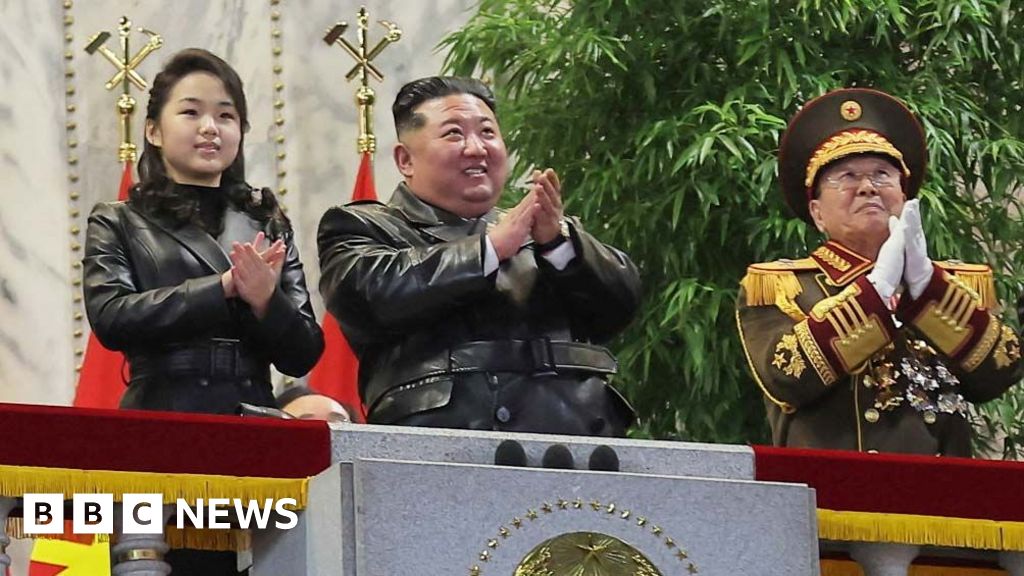
North Korea's relentless pursuit of nuclear weapons is multifaceted. Primarily, it serves as the ultimate deterrent against perceived external aggression, particularly from the United States and its allies. For a small, isolated nation, nuclear weapons are seen as the guarantor of sovereignty and regime survival. Furthermore, they are a significant source of international leverage, allowing Pyongyang to demand attention and concessions on its own terms. The regular display of military capabilities, such as the elaborate military parade that capped the Workers' Party congress, showcasing new ballistic missiles and other advanced weaponry, reinforces this message of strength and readiness.
This commitment to expansion presents a formidable challenge to international non-proliferation efforts and regional stability. Each new test, each advanced weapon displayed, increases the risk of miscalculation and escalates tensions. The north korea us attitude on this nuclear expansion will dictate the trajectory of future security dynamics in East Asia.
Severing Ties with South Korea: A Hostile Stance
While leaving a conditional door open to the US, Kim Jong Un slammed it shut on South Korea. His rhetoric was exceptionally harsh, describing Seoul as North Korea's "most hostile enemy" and unequivocally ruling out any discussions. He dismissed recent signals of détente from the South as "deceptive" and asserted that North Korea had "absolutely no business" dealing with its southern neighbor, with whom it remains technically at war.
In a particularly stark statement, Kim declared that North Korea no longer considered South Koreans as "compatriots," having "permanently excluded" them from that category. He went further, threatening to "initiate arbitrary action" if Seoul engaged in what he termed "obnoxious behavior," warning that "South Korea's complete collapse cannot be ruled out." This aggressive posture suggests a strategy to isolate Seoul diplomatically from any future US-North Korea dialogue, forcing Washington to deal directly with Pyongyang without South Korean mediation. This strategic move highlights Kim's desire to control the narrative and the terms of engagement directly with the perceived superpower. To learn more about this distinct policy, refer to Kim Jong Un's Policy: US Talks Open, South Korea Permanently Excluded.
Practical Insight: Understanding this categorical rejection of South Korea is crucial for policymakers. It means any "two-track" approach involving simultaneous talks with both Koreas and the US may be futile, at least for the foreseeable future. Pyongyang appears intent on asserting its independent standing and leveraging its nuclear status to dictate terms directly to Washington.
Navigating the Future: Implications for US Policy
Kim Jong Un's latest pronouncements present a significant dilemma for US foreign policy. The demand to "respect our current status" effectively means recognizing North Korea as a nuclear state, a concession that runs contrary to decades of US policy aimed at denuclearization. If the US were to acknowledge North Korea's nuclear status, it could undermine the global non-proliferation regime and potentially encourage other states to pursue nuclear weapons.
Conversely, maintaining a hardline stance of "no talks without denuclearization" risks further isolation of Pyongyang, potential escalation of provocations, and continued advancement of North Korea's nuclear and missile programs. The challenge for Washington is to find a pragmatic path that addresses security concerns, prevents escalation, and perhaps, eventually leads to some form of verifiable arms control or reduction, even if complete denuclearization remains a distant goal.
Practical Advice for Diplomacy: Future US administrations will need to carefully weigh their options. Continuing "strategic patience" or solely relying on sanctions has not deterred North Korea's nuclear ambitions. A new approach might involve:
- Exploratory Talks: Engaging in low-level, non-committal talks to probe Pyongyang's specific demands and red lines.
- Creative Incentives: Beyond sanctions relief, exploring other forms of security assurances or economic aid that do not legitimize the nuclear program but might encourage behavioral changes.
- Multilateral Pressure: Reinvigorating international cooperation, particularly with China, to present a unified front.
- Strengthening Alliances: Reassuring South Korea and Japan of continued US security commitments in the face of North Korean threats.
Ultimately, the future of the Korean Peninsula hinges on the evolving north korea us attitude and Washington's strategic response to Pyongyang's unequivocal demands.
Conclusion
Kim Jong Un's statements at the Workers' Party congress have drawn a clear line in the sand. He has articulated a vision where North Korea is an undeniable nuclear power, demanding respect for this status from the United States as a prerequisite for any meaningful dialogue. Simultaneously, he has intensified hostility towards South Korea, effectively severing ties and seeking to exclude Seoul from future geopolitical calculations. This dual message—conditional openness to the US alongside unwavering nuclear expansion and outright rejection of South Korea—sets a challenging stage for international diplomacy. The ball is now firmly in Washington's court, with the future of stability in East Asia depending on how the north korea us attitude evolves in response to these stark new terms.